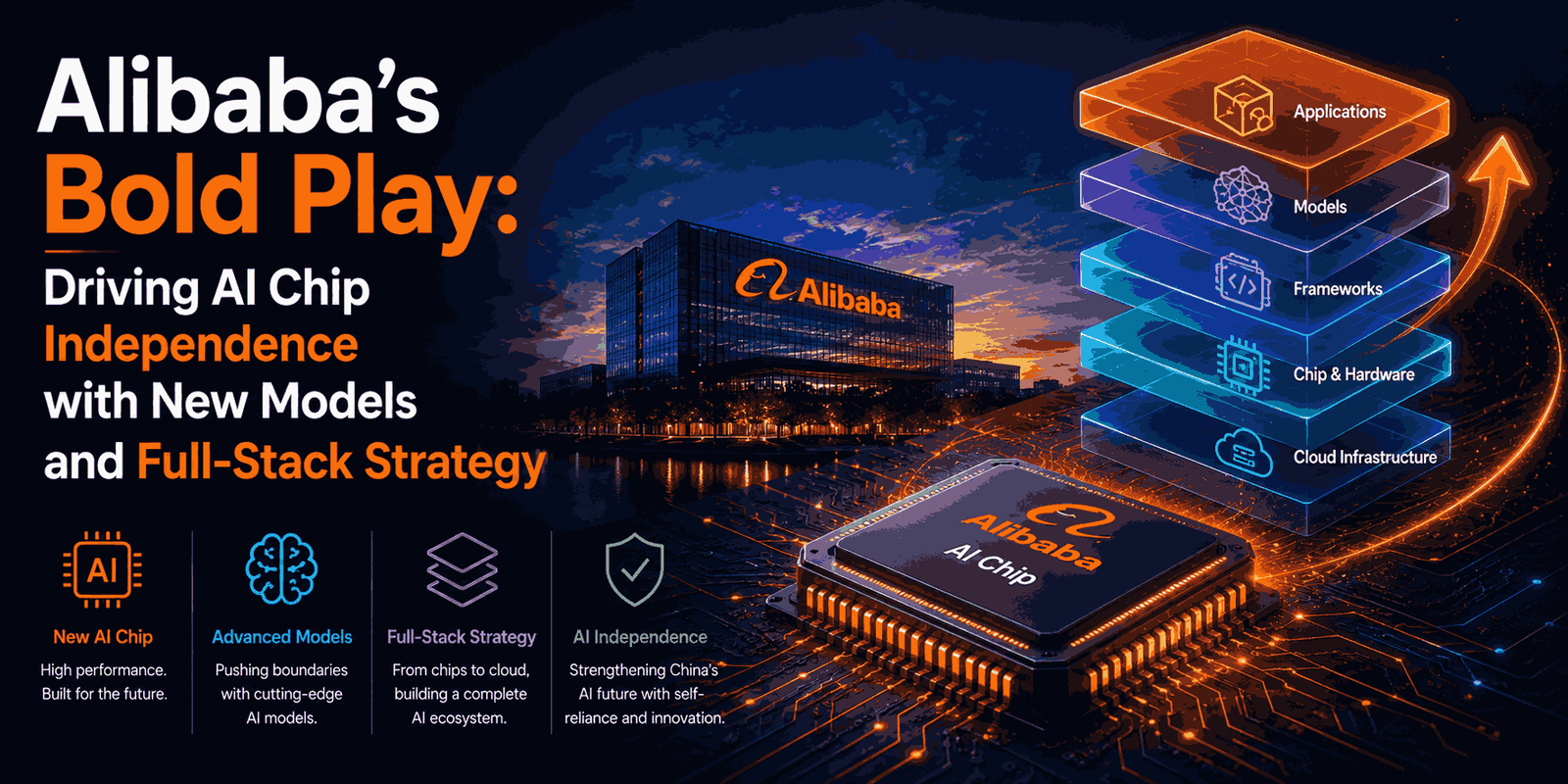
The world of AI is moving incredibly fast, and big tech companies are all about taking control – from the chips they use to the software they build. China’s tech giant, Alibaba, is the latest to make a huge splash in this area. They’ve just pulled back the curtain on a brand-new AI chip and an even more advanced AI model.
This isn’t just a simple product launch; it’s a clear signal of Alibaba’s push for AI chip independence with new models. Their goal? To rely less on outside suppliers like Nvidia and really carve out their own strong spot in the global AI race.
Introducing Zhenwu M890 and Qwen 3.7-Max
So, what exactly did Alibaba announce? Two big things are at the core of their new strategy:
- The Zhenwu M890 AI Accelerator Chip: This isn’t just any chip. It’s an AI accelerator chip built by T-Head, Alibaba’s own semiconductor division. The Zhenwu M890 is designed for both training and inference (basically, teaching AI and then having it perform tasks). It’s especially good for the complex needs of AI agents. Think of it as a powerhouse for handling huge amounts of memory – crucial for “long context windows” – and making sure different AI models can talk to each other smoothly.
- The Qwen 3.7-Max AI Model: Launched right alongside the M890, this is an upgraded large language model (LLM). It’s built to really shine on the M890 chip, capable of running for an impressive 35 hours straight! The Qwen 3.7-Max is a pro at “continuous reasoning” over long periods and can juggle over 1,000 tool calls. What does that mean for you? It can handle tough jobs like editing complex code across multiple files, refactoring it, and even prototyping new ideas. All thanks to its massive 1-million token context window.
Together, the Zhenwu M890 chip and the Qwen 3.7-Max model form a powerful, integrated system. It’s a clear look into how Alibaba sees the future of AI agents.
Why Alibaba is Prioritizing AI Chip Independence
So, why is Alibaba pouring so much effort into building its own AI chips and models? It’s not just about showing off their technical skills. This is a crucial strategic move.
It’s part of a bigger trend, actually. Many major Chinese AI companies, like Baidu and Huawei, are working hard to reduce how much they rely on foreign technology, especially Nvidia GPUs.
As analyst Lian Jye Su from Omdia points out, this is a “major plan among all the hyperscalers to be a lot more independent, to be a lot more self-sufficient” within China. There are several key reasons behind this drive:
- National Independence: Relying less on outside chipmakers (especially from the U.S.) helps Alibaba avoid risks from global politics or potential export bans. It’s about securing their supply chain.
- Saving Money: Over time, using their own chipsets for AI tasks can cut down on massive operational costs. This means less money spent on expensive external hardware.
- Tailored Performance: When you design your own chips, you can customize them perfectly for your specific needs, like AI agents. This “chip customization” can give Alibaba an edge, potentially offering better performance than rivals who just buy off-the-shelf options. This “full-stack AI strategy” is something you see with other global tech giants too, like AWS and Google.
Building a Full-Stack AI Ecosystem
What Alibaba is doing here is clear: they want to build a complete, end-to-end AI system. Think of it as owning every single piece of the puzzle, from the core AI accelerator chip to the sophisticated AI models.
By controlling both the hardware and the software, Alibaba can give its cloud customers a much smoother, optimized experience. It creates a stronger link between their cloud services and AI tools. This means they can offer custom solutions perfectly tuned to their own setup and the specific needs of their users. Their focus on AI agents capabilities with the Zhenwu M890 and Qwen 3.7-Max really puts them in a good spot to grab new opportunities in the world of autonomous AI systems.
Navigating the Hurdles: Challenges Ahead
Now, it’s not all smooth sailing. Alibaba’s path to true AI chip independence comes with some real challenges.
- Supply Chain Roadblocks: While China’s semiconductor industry is growing, it’s still behind global leaders when it comes to mature supply chains and advanced manufacturing. Leaning entirely on local production could mean facing bottlenecks and less efficiency compared to the more established international options. This impacts supply chain resilience.
- Performance Gap: Analyst Lian Jye Su also pointed out a key hurdle: “Their chipset efficiency will be rather poor as compared to global competition.” This means that even with cost savings and independence, Alibaba’s in-house chips might not quite match the raw performance per watt or per dollar of top players like Nvidia over the long haul. Closing this performance gap, while still keeping costs in check, will be a huge task.
- Fierce Competition: The world of AI hardware and software is incredibly competitive. Alibaba’s announcement happened right after Google showed off its eighth-generation TPU. It’s a constant race of innovation, and everyone is pushing the boundaries of deep learning and enterprise AI.
Why This Matters for the Future of AI
So, why should you care about Alibaba building its own AI chips and models? This isn’t just another tech announcement. It’s a big statement about where AI is headed.
It highlights a global trend: major tech companies want more control and self-sufficiency over the core tech that drives AI. This drive for independence sparks a lot of innovation. But it also means we’re seeing more diverse and specialized hardware and software ecosystems emerge.
For any business using or planning to use AI, understanding these shifts is absolutely key. It will help you make smarter choices about your own AI infrastructure and who you partner with.
Frequently Asked Questions About Alibaba’s AI Strategy
Q1: What is Alibaba’s primary goal with its new AI chips and models?
Alibaba’s primary goal is to achieve greater AI chip independence with new models from foreign suppliers, particularly Nvidia, to reduce costs, enhance customization for specific AI workloads like agentic AI, and solidify its full-stack AI strategy.
Q2: What are the key features of Alibaba’s new Zhenwu M890 chip?
The Zhenwu M890 is an AI accelerator chip optimized for AI agents, designed to handle large memory demands for long context windows, and enable efficient communication between multiple AI models.
Q3: How does the Qwen 3.7-Max model enhance Alibaba’s AI capabilities?
Qwen 3.7-Max is an advanced AI model capable of continuous reasoning, managing over 1,000 tool calls, and handling complex tasks like multi-file code editing, refactoring, and prototyping, backed by a 1-million token context window.
Q4: What challenges does Alibaba face in pursuing AI chip independence?
Alibaba faces challenges related to the relative weakness of China’s chipset supply chain compared to global competitors and potential efficiency disadvantages of its in-house chips over the long term.
Q5: How does this fit into Alibaba’s overall strategy?
This move is part of Alibaba’s full-stack AI strategy, allowing it to integrate its hardware and software more tightly, leading to better performance and customization options, similar to other major cloud providers like AWS and Google.
Final Thoughts
To wrap things up, Alibaba’s dive into creating its own AI chips and models is a huge step. It’s a key part of their plan to become a major player in the global AI space.
By owning both the hardware and the software layers, the company is laying down a foundation that’s stronger, more cost-efficient, and super-optimized for its future AI products – especially for the fast-growing area of AI agents. Yes, there are still hurdles ahead. But this Alibaba’s push for AI chip independence with new models clearly shows where big tech companies are going: towards more control and more innovation across the entire AI pipeline.
Want to keep up with the latest AI breakthroughs and strategic moves? Don’t miss out – [subscribe to our newsletter] for expert insights delivered right to your inbox!