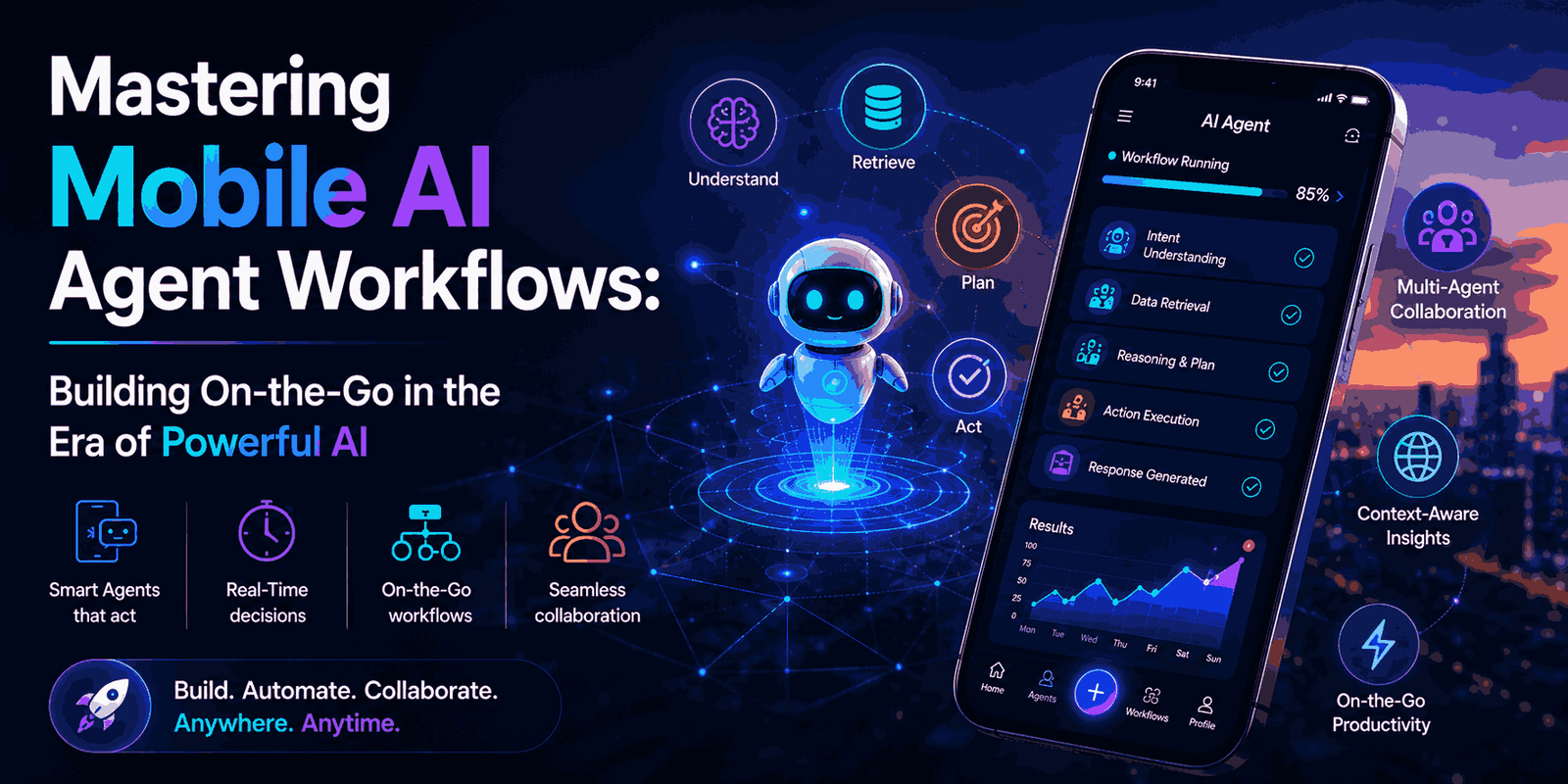
The world of AI is moving faster than ever. With incredible new models like Gemini coming out, one big idea keeps popping up: “the model is the product.” What does this mean? Basically, the core intelligence of AI is getting so good that the tools we use around it (the “harnesses”) are changing. They’re moving from complex control systems to simpler, smarter ways to manage things.
So, what does this mean for us developers? It points to a future where powerful AI agents aren’t just stuck on our desktops. They’re becoming a key part of our mobile AI agent workflows.
This isn’t just a fancy idea; it’s happening right now. Developers are already using their phones to handle complicated AI tasks. It’s changing how we brainstorm, build, and launch AI solutions. Let’s dive into how this change is unfolding and what it means for the future of AI development.
The Rise of On-the-Go AI Agent Management
For many developers, coding or managing complex AI agents from a smartphone might sound impossible. But several platforms are already making this a reality. Instead of being tied to your desk, imagine starting a coding task, checking a code change (a “diff”), or answering an agent’s question – all from your pocket.
Tools like Claude Code now offer remote control features, letting you interact with your agent sessions from your phone. Similarly, platforms like Pi are enabling custom mobile connections, like Telegram bots, to control agents. Droid also offers mobile web access alongside its “Droid computers.” This growing trend means we’re moving beyond just brainstorming on our phones; we’re actively managing and guiding agent operations. The line between our personal devices and powerful development environments is blurring.
Key Innovations Powering Mobile AI Agent Workflows
This shift towards more flexible AI agent management is happening thanks to some big updates and smart moves across the industry:
OpenAI’s Codex Comes to Your Phone
OpenAI’s Codex is a leader in making mobile-first development possible. Its latest update lets developers kick off tasks right from their phones. While the big jobs – like managing files, setting things up, and handling passwords – still happen on a Mac, devbox, or remote machine, you can now approve commands, answer questions, and review code changes directly from your mobile device. This update also introduced “Hooks” to Codex, promising even deeper ways to connect and automate things.
Anthropic’s Strategic Moves and Managed Agents
Anthropic recently bought Stainless, a company that builds SDKs (Software Development Kits). This move signals their aim to make development integration smoother. At their London conference, they also showed off major improvements to “Claude Managed Agents.” This product, designed for businesses, now includes self-hosted sandboxes and MCP tunnels. This makes it easier for companies to deploy and run AI agents securely and efficiently, potentially extending their capabilities to various mobile devices.
Cursor’s Composer 2.5: High Performance, Lower Cost
Cursor has launched Composer 2.5, a model partly trained using SpaceX’s GPUs. Benchmarks suggest it performs as well as top models like Opus 4.7-xhigh and GPT-5.5-high, but costs much less. This affordability could bring powerful AI development to more people, making advanced mobile AI agent workflows practical for a wider range of developers and startups.
Broadening the AI Development Horizon: What Else Is New?
Beyond direct mobile features, the AI world is buzzing with innovations that will ultimately make it easier to interact with and manage intelligent agents:
- Cybersecurity with Mythos: Cloudflare tested Anthropic’s Mythos model and found it excellent at finding complex security weaknesses in code. This shows how AI agents can boost security, but also reminds us that a well-designed “harness” is still crucial to get the most out of a model.
- Emerging AI Startups: Keep an eye on companies like Magicpath (for design tools) and Raindrop AI (for watching agents in action). Both are building their platforms to work well with external coding agents like Claude Code and Codex, pointing to a more connected AI development future.
- Command-Line Interfaces for AI: Grok/xAI now offers a coding CLI (Command-Line Interface). We’re all waiting to see what Google might announce about a Gemini CLI at I/O. CLIs are core tools for developers, and linking them with advanced AI models will give us even more programmatic control.
- Enhanced Agent Capabilities: Linear Agent can now directly read codebases to form ideas, investigate support issues, and find the right team members. Devin Auto-Triage monitors, investigates, and suggests fixes for bugs and incidents. These show agents taking on increasingly complex tasks in our development cycles.
- Open-Source Agent Resources: The community is building tools like Browse.sh (a catalog of agent skills for internet tasks) and Watchmen (local, open-source skill files for coding agents from past sessions). These aim to standardize and share agent capabilities.
- AI Observability and Design Systems: Motus Tracing offers open-source observability for AI agents – essential for understanding how they behave in real-world use. Designmd.sh is creating a public registry for DESIGN.md files, helping agents understand design systems within code repositories.
- Contextualizing AI with HTML: The idea of “HTML is the new markdown” suggests using HTML elements as specifications, small user interfaces, and human-readable context for agents. This offers a richer way for agents to understand and work with what humans intend.
The Evolving Role of the AI Harness
As AI models get incredibly powerful, the traditional “harness” – which used to pick tools, manage system prompts, and handle context – will change. Its new role will likely focus on higher-level management: orchestrating different agents, creating secure testing environments (sandboxing), and smoothly handling deployments in the cloud or on local machines. This shift means more focus on making these powerful models truly usable and manageable across all sorts of computing environments, including our mobile devices.
Why Mobile AI Agent Workflows Matter
Being able to manage complex AI tasks and development cycles from a mobile device isn’t just convenient; it’s a game-changer. It offers:
- Unprecedented Flexibility: Developers aren’t stuck at their desks anymore, leading to more dynamic and responsive development.
- Faster Progress: Quick reviews and approvals from anywhere mean development cycles can speed up significantly.
- Wider Access: Cheaper, high-performance models combined with mobile access open up advanced AI development to many more people.
- Better Oversight: Keeping an eye on and controlling autonomous agents, even when you’re away from your computer, helps keep projects on track.
This blend of powerful AI models and versatile mobile access is paving the way for a new era of agile, everywhere-you-go AI development. It’s making sophisticated mobile AI agent workflows a standard for today’s developer.
FAQ
What is an AI agent harness?
An AI agent harness, sometimes called an orchestration layer or framework, is the system that manages how an AI model interacts with tools, understands context, processes information, and performs tasks. With advanced models, its role is shifting from basic control to more complex agent orchestration, secure testing (sandboxing), and deployment management, especially when it comes to mobile AI agent workflows.
How are AI agents becoming more mobile?
AI agents are becoming more mobile through dedicated apps (like Codex on your phone), remote control features in agent frameworks (e.g., Claude Code’s /remote-control), and custom integrations (like Pi’s Telegram bot). These allow developers to start tasks, approve actions, and monitor progress right from their smartphones, making mobile AI agent workflows increasingly practical.
What does “the model is the product” mean?
This phrase suggests that the core capabilities and performance of the AI model itself are becoming the main value. It’s not just about the user interface or specific application built on top. It implies that truly exceptional models will make building surrounding applications and services much simpler.
Are AI agents ready for enterprise deployment?
Yes, they are. With advancements like Anthropic’s Claude Managed Agents, which offer self-hosted sandboxes and secure tunnels, AI agents are increasingly designed for secure and scalable use in businesses. Companies are focusing on making agents easier to run and monitor in production environments.
Final Thoughts
The future of AI development points to intelligence that’s not only more powerful but also more accessible and widespread. The progress in managing AI agents from mobile devices is a huge step on this journey. It’s unlocking new levels of flexibility and productivity for developers. As we keep refining how we interact with these intelligent systems, the efficiency and reach of our mobile AI agent workflows will only grow, fundamentally changing how we build, deploy, and collaborate on AI-powered solutions.
Ready to explore the latest AI innovations and streamline your development? Stay tuned for more insights into the tools shaping the future of AI.