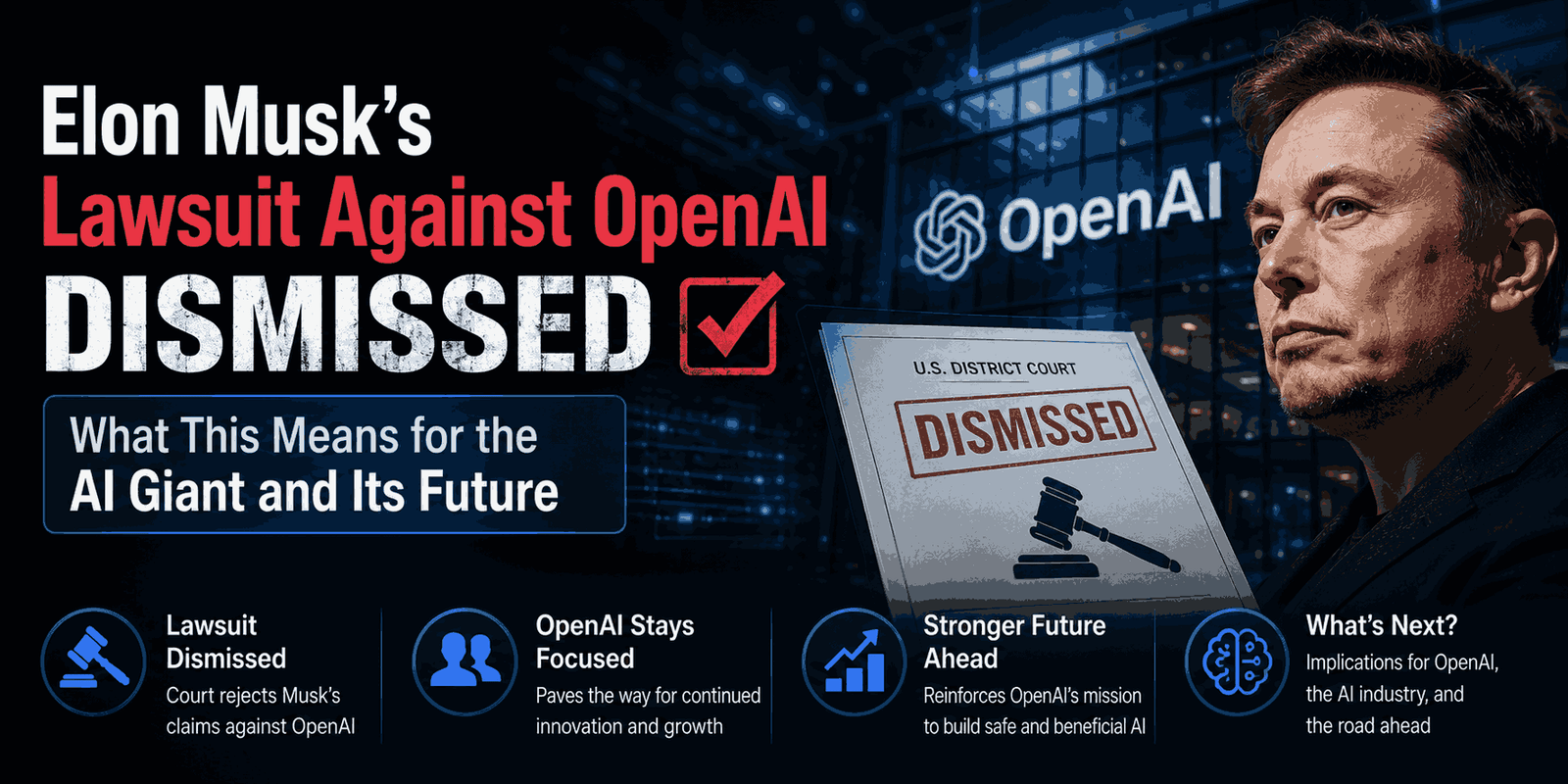
Big news in the world of artificial intelligence! A jury has just dismissed Elon Musk’s lawsuit against OpenAI and its co-founders, Sam Altman and Greg Brockman. This decision is a major win for OpenAI, especially as they reportedly plan for a highly anticipated Initial Public Offering (IPO) later this year.
This ruling doesn’t just clear a path for OpenAI’s business plans; it also shines a light on the tricky legal and business issues popping up in the booming AI industry.
The Heart of the Matter: OpenAI’s Original Mission
Elon Musk, who actually helped co-found OpenAI, filed the lawsuit claiming the AI lab had completely abandoned its initial non-profit mission. He argued that OpenAI, which he helped start in 2015, was supposed to develop artificial general intelligence (AGI) for everyone’s benefit, acting as an open-source alternative to big tech companies.
Musk stated he donated $38 million with the understanding that OpenAI would stay a non-profit, focused on open-source development. But, he claimed, the company instead became focused on making money, especially after getting a huge investment from Microsoft in 2021. For Musk, this shift was a breach of contract and an attempt to create a monopoly.
The Jury’s Decision: All About Timing
The jury’s ruling, later confirmed by Judge Yvonne Gonzalez Rogers, didn’t actually look at whether Musk’s claims were true. Instead, they found that Musk simply missed the three-year deadline, or “statute of limitations,” to file his lawsuit. Evidence suggested that Musk was aware of OpenAI’s intentions to go public and adopt a more for-profit structure as early as 2021.
So, this dismissal was a procedural one, meaning the court decided on the timing of his legal challenge, not the core arguments about OpenAI’s mission.
What This Means for OpenAI: A Clear Path to IPO?
For OpenAI, this dismissal is a huge relief. It gets rid of a significant legal worry that could have complicated their plans for going public. An IPO would allow OpenAI to raise a lot of money, which they could then use to fund more research, development, and expansion of their generative AI tech, like ChatGPT.
“This victory of this particular hurdle, which is non-trivial, is now out of the way,” noted Michael Bennett, a lawyer and associate vice chancellor for data science and AI strategy at the University of Illinois Chicago. A clearer path could boost investor confidence and let the company fully focus on its technology and market growth.
What This Means for Elon Musk
Elon Musk is known for his ambitious projects, including his own AI company, xAI, and its generative AI model, Grok. While this legal setback isn’t catastrophic, it might affect his reputation a bit. Some saw the lawsuit as self-serving, especially since Grok is a direct competitor to OpenAI’s ChatGPT.
According to Bennett, this ruling could leave “a little bit of egg on the face for Musk and strategy” in financial circles. It’s unlikely to impact other ventures like SpaceX’s upcoming IPO significantly, but it might make some investors question the wisdom of the lawsuit itself.
The Bigger Picture: AI’s Evolving Business Models
This case really highlights a common tension in the AI world: how to balance open-source development and humanitarian goals with the massive financial potential of AI technology. As AI models get more powerful and seep into every industry, questions about who controls them, who owns them, and who can access them become super important.
Many AI startups begin with big, altruistic ideas or research goals. But developing and maintaining cutting-edge AI is incredibly expensive. This often pushes them towards commercialization. That shift can spark complex debates about intellectual property, data ethics, and the responsibilities of those developing AI.
Why This Case Matters for the AI Industry
- Investor Confidence: When a major player like OpenAI gets legal clarity, it can make investors more confident about backing other AI startups and established companies.
- Business Model Validation: This dismissal reinforces that a for-profit model can be viable for advanced AI development, even if the company started with non-profit roots.
- Legal Timelines: Even though it was a procedural dismissal, it reminds us how important legal deadlines are in the fast-paced tech world. This could influence how future disputes are handled.
- Competitive Landscape: With this hurdle gone, OpenAI can double down on innovation and market leadership. This will definitely impact how it competes with rivals like xAI, Google, and Anthropic.
FAQ: Understanding the Musk vs. OpenAI Lawsuit
Q1: What was Elon Musk’s main accusation against OpenAI?
A1: Elon Musk accused OpenAI of going back on its original non-profit mission to develop artificial general intelligence (AGI) for humanity. He claimed the company switched to a for-profit model, moving away from its founding principles, especially after getting investments from Microsoft.
Q2: Why was the lawsuit dismissed?
A2: The lawsuit was dismissed because the jury found that Elon Musk had missed the three-year “statute of limitations” deadline to file the complaint. The court determined he was aware of OpenAI’s plans to pursue a for-profit path as far back as 2021.
Q3: Does this ruling affect OpenAI’s products like ChatGPT?
A3: The ruling mainly affects OpenAI’s business stability and its journey toward a potential IPO. It doesn’t directly change how products like ChatGPT work or their availability. Instead, it ensures the company can continue its development and commercialization plans without this particular legal challenge.
Q4: How does this impact Elon Musk’s AI company, xAI?
A4: While xAI and its Grok AI model compete with OpenAI, the dismissal of this lawsuit is more of a reputational ding for Musk than a direct operational hit for xAI. User choices for AI models are usually based on performance and specific needs, so it’s unlikely to sway existing enterprise customers.
Q5: What is an IPO, and why is it important for OpenAI?
A5: IPO stands for Initial Public Offering. It’s when a private company first sells shares of its stock to the public. For OpenAI, an IPO would allow it to raise a huge amount of capital from public investors, providing funds for continued research, development, and scaling of its advanced AI technologies.
Final Thoughts
The dismissal of Elon Musk’s lawsuit against OpenAI marks a really important moment for one of the world’s leading AI companies. It solidifies OpenAI’s commercial direction and smooths its path toward a major financial milestone. As the AI industry keeps growing at lightning speed, legal battles like this show the complex challenges that come up when cutting-edge technology meets evolving business models and competitive interests. It’ll be fascinating to watch how OpenAI uses this newfound clarity to push the boundaries of artificial intelligence even further.
Want to stay on top of the latest developments in AI ethics and major tech company news? Explore our articles on [AI policy and governance] or delve into profiles of leading [generative AI models].