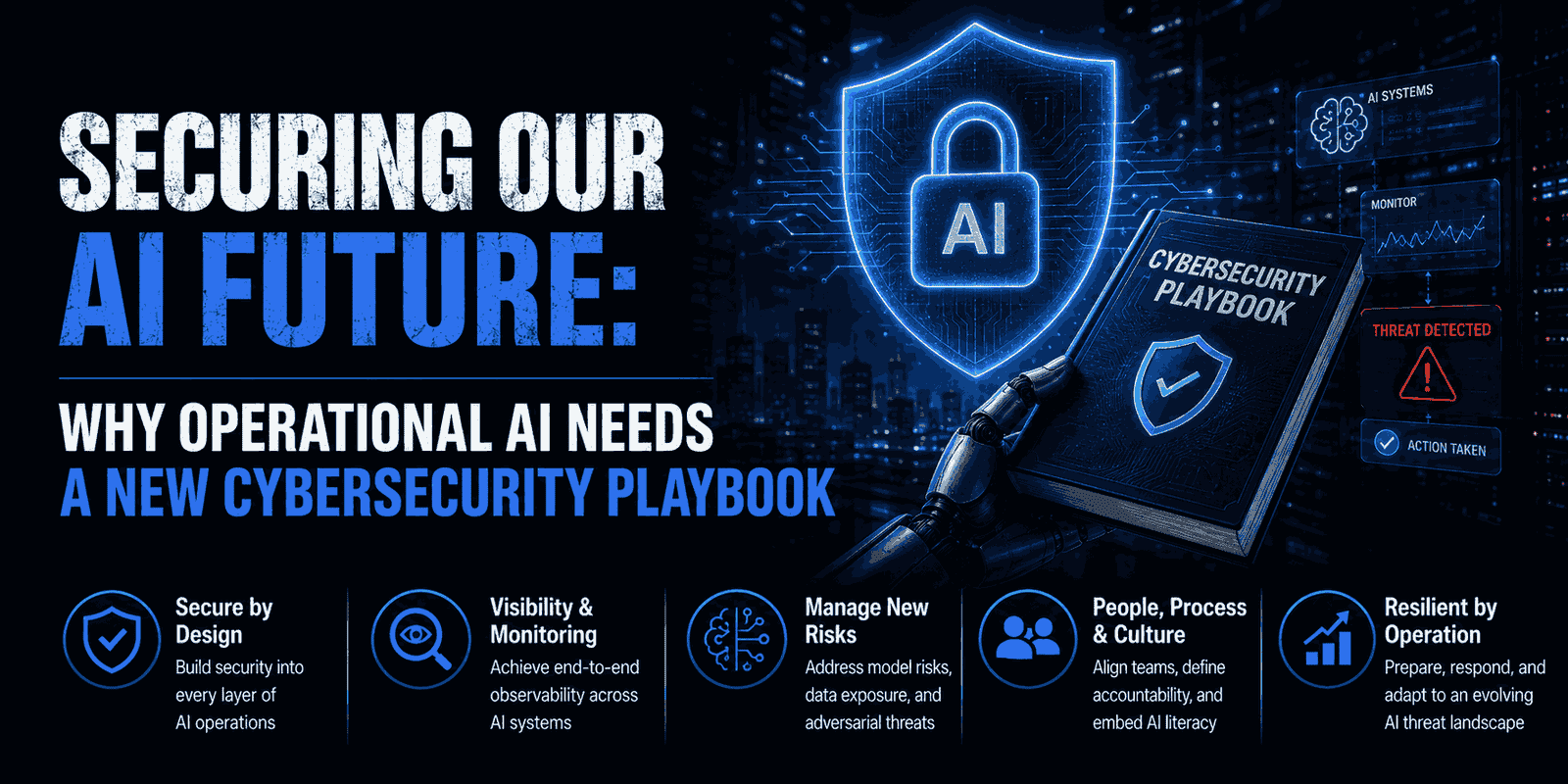
AI isn’t just a lab experiment anymore. It’s stepping out of the proof-of-concept phase and into the very heart of how businesses operate. And as artificial intelligence gets more integrated, we’re quickly realizing a big truth: its security challenges are growing just as fast.
Think about it. AI isn’t just analyzing data in the background; it’s actively involved in our daily workflows. It’s making decisions, and sometimes even acting on its own within our systems. This is huge for efficiency, but it brings completely new cybersecurity headaches that old-school methods simply can’t handle.
The real question isn’t whether AI can be secure. It’s about how we update our security strategies to protect AI systems that can literally think and act on their own.
The Shifting Sands of AI Security
For a long time, AI security mostly focused on protecting the models themselves and the data they processed. We worried about data breaches or “poisoning” a model with bad information.
But today’s AI is different. We’re now dealing with “operational AI” – systems that are deeply embedded, constantly talking to other systems, and often autonomous.
Picture an AI agent managing your entire supply chain, or another handling all your customer service calls. Maybe one is even automating parts of your IT infrastructure. These aren’t just fancy calculators; they’re active participants in your business. This means the door is open for all sorts of new vulnerabilities, governance gaps, and risks.
Key Security Challenges of Autonomous AI Systems
As AI becomes more operational, some major security hurdles pop up:
Brand New Attack Surfaces
Every new AI integration, especially those that interact with other systems or external environments, creates another potential entry point for hackers. How do you secure an AI agent that pulls information from five different databases, then executes a task in a completely separate system? Every single interaction point is a possible vulnerability waiting to be exploited.
When Defense Becomes a Threat
AI is a bit of a double-edged sword. It can be an incredible asset for spotting and stopping cyber threats. But bad actors can also use AI to their advantage. They can craft more sophisticated phishing attacks, automate reconnaissance (gathering info on targets), or even develop brand-new malware faster than ever. Protecting your AI from another AI is a growing concern.
Tough to Monitor and Govern
Traditional security tools often struggle to keep up with the dynamic, sometimes unpredictable, nature of AI. How do you effectively monitor an AI system that’s making real-time decisions? And how do you ensure those decisions always stick to your security policies and ethical guidelines? The sheer autonomy of these systems makes consistent oversight a real challenge.
Not Enough Skilled People
Many companies are jumping on AI faster than they can train their staff to deploy, manage, and secure it properly. This creates a big skill gap. Companies are left vulnerable as their internal teams try to catch up.
Industry Efforts: Building Resilience Into AI
Recognizing these issues, the tech industry is moving away from just reacting to threats. Instead, they’re focusing on building resilience into AI systems from the start.
A great example is OpenAI’s Daybreak initiative. This program aims to strengthen AI systems against vulnerabilities by working with top cybersecurity firms like Cisco, CrowdStrike, and Cloudflare.
This collaborative effort makes a crucial point: AI cybersecurity isn’t something one company can solve alone. It needs an “all hands on deck” approach, pooling expertise to build strong defenses against evolving threats.
Why Old Security Methods Just Don’t Cut It
You might be wondering if your current cybersecurity frameworks are enough. The short answer is usually no.
Traditional security mostly focuses on protecting static assets, clearly defined network borders, and processes controlled by humans. Operational AI, however, operates differently:
- Dynamic Behavior: AI systems learn and adapt. This means their behavior can change in ways you didn’t expect.
- Interconnectedness: They often integrate across many different business units and external services, massively expanding your risk perimeter.
- Autonomous Actions: AI agents can perform actions without any human input. This means a breach could lead to rapid, widespread damage before anyone even notices.
Look at recent data breaches, like those involving the ed-tech platform Canvas. These incidents show how tough it is to secure complex, interconnected systems, even before we fully add autonomous AI into the mix. The core problem has moved beyond simply building AI to safely and reliably operating it at scale.
The Need for AI Deployment Pros
The growing complexity of secure AI deployment is clear when you look at industry trends. Companies like Google Cloud are actively hiring “AI deployment engineers.” These are specialists who can bridge the gap between developing an AI model and integrating it securely and scalably into a large enterprise.
Similarly, OpenAI launching a dedicated consulting business shows just how much demand there is for expert guidance in safely embedding AI into corporate environments.
This isn’t just about technical skills. It’s about understanding the fine details of AI governance, ensuring you can actually see what your AI is doing (observability), and building resilient infrastructure that can keep pace with increasingly autonomous and “agent-rich” systems.
Beyond Security: The Bigger Picture of AI Adoption
While security is super important, operationalizing AI is also reshaping other key parts of business:
- Rethinking Observability: As AI systems sometimes act like “black boxes,” traditional monitoring tools are becoming outdated. Businesses need new ways to understand what their AI is doing and, crucially, why.
- Workforce Transformation: Employees need new skills to work effectively alongside AI tools. This requires significant investment in training and upskilling.
- Infrastructure Demands: The “next frontier” of AI, as seen in partnerships like Nvidia and Ineffable Intelligence, needs serious computing power and robust infrastructure.
- Agentic Commerce: AI systems that can independently shop, recommend, and complete transactions are coming soon. This promises huge economic shifts but also opens new doors for fraud and manipulation.
- Private AI Models: More companies are choosing private AI models. This gives them tighter control over their data, boosts security, and lets them customize AI behavior for their specific internal needs.
Why This Matters for Your Business
Successfully bringing AI into your operations offers huge advantages, from boosting efficiency to creating innovative new services.
However, ignoring the security implications can lead to disastrous consequences. We’re talking data breaches, operational shutdowns, damage to your reputation, and hefty regulatory penalties. Investing in a strong AI security strategy isn’t an afterthought; it’s a fundamental requirement for truly sustainable AI adoption and managing risks effectively.
FAQ About Operational AI Security
Q1: What is “operational AI”?
A1: Operational AI refers to AI systems that aren’t just for analysis. They’re actively integrated into business processes, performing tasks, making decisions, and often acting autonomously within your company’s environment.
Q2: How is securing operational AI different from traditional cybersecurity?
A2: Traditional cybersecurity often protects static data and defined network borders. Operational AI involves dynamic, autonomous, and interconnected systems that can learn and adapt. This creates new attack surfaces and governance challenges, requiring more proactive, built-in security resilience.
Q3: What are some examples of AI security threats?
A3: Threats include prompt injection attacks (tricking the AI with bad input), data poisoning (feeding it malicious data), adversarial attacks (making the AI make wrong decisions), model theft, and exploiting autonomous AI agents to perform malicious actions within a system.
Q4: Why are companies like OpenAI and Google Cloud focusing on AI deployment?
A4: Because simply building an AI model is only half the battle. Securely and effectively deploying and managing these AI systems at an enterprise scale, especially as they become more autonomous, requires specialized expertise and tools that many organizations currently lack.
Q5: Can AI help with cybersecurity?
A5: Absolutely! AI is a powerful tool for detecting threats, spotting anomalies, automating security responses, and analyzing huge amounts of security data. However, it’s critical to secure the AI tools themselves to prevent them from becoming vulnerabilities.
Final Thoughts
Our journey into operational AI is truly transformative, offering incredible opportunities for innovation and efficiency. But this evolution also brings a parallel rise in security demands. For businesses to truly harness the power of AI, they must proactively tackle the unique challenges of securing these intelligent, autonomous systems.
It’s about building trust, ensuring resilience, and laying down a secure foundation for the AI-driven future.
Curious how the latest AI security advancements could impact your business? Explore our AI security resources for deeper insights and practical strategies.