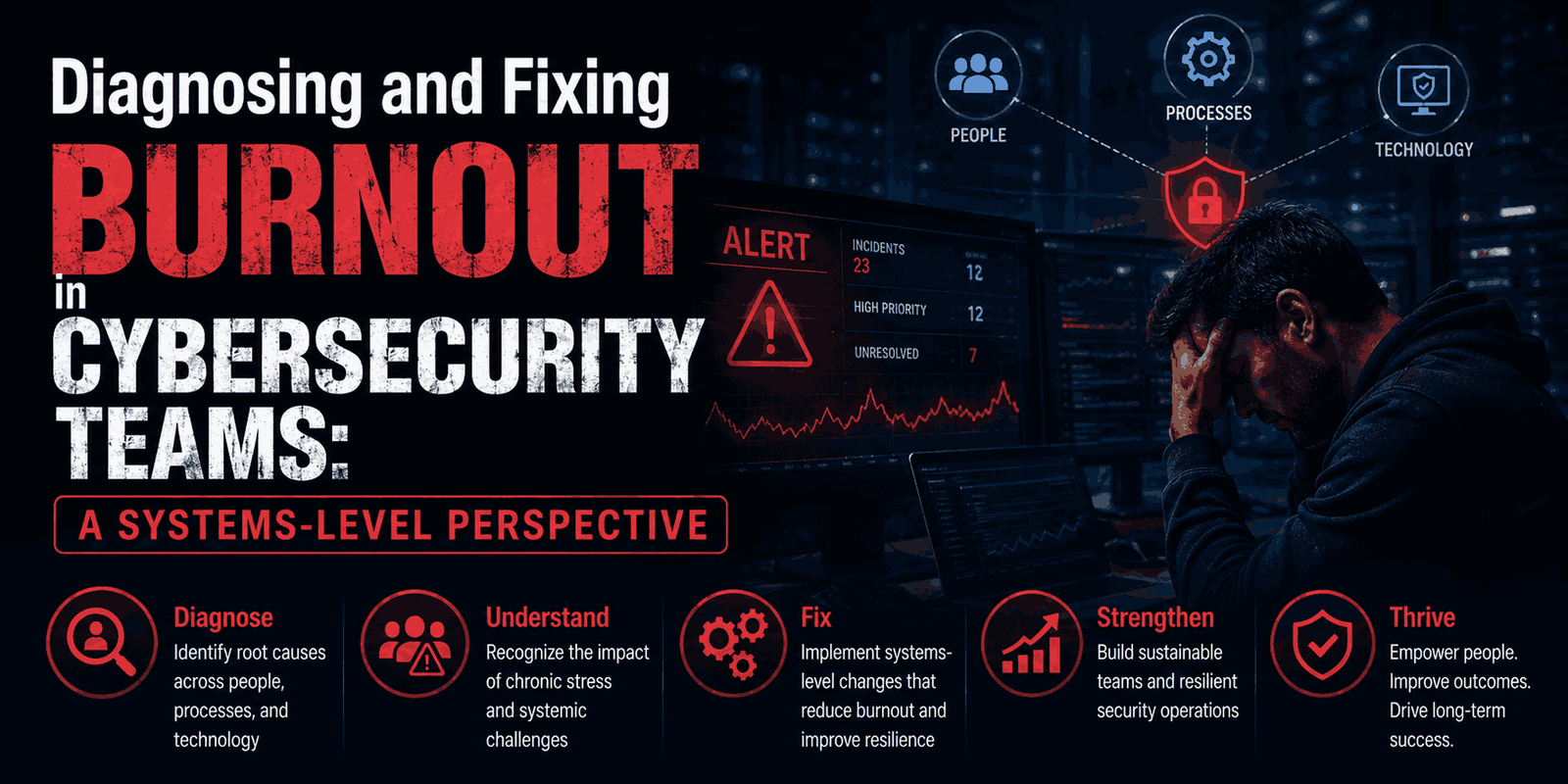
Ever noticed your cybersecurity team just… acting a bit off? Maybe your Red Team is suddenly blunt, or your sharpest SOC analysts are missing alerts even “Tiffany in Accounting” would spot. It’s easy to shrug this off as “burnout” and move on. But that common term often falls short.
What if we looked at it differently? What if we saw our human cybersecurity teams not just as individuals, but as complex systems with their own specific weak spots?
This article introduces a fresh, systems-theory approach that goes beyond basic wellness checks. We’ll explore how to diagnose and tackle deeper, role-specific “occupational pathologies” within your cybersecurity “human operating system” before they lead to critical failures – or worse, a costly data breach.
Beyond “Burnout”: Understanding Occupational Pathology
“Burnout” is a term everyone knows. But for a tech leader or systems architect, it often lacks the precision needed to actually fix things. Let’s think of it instead as an “Occupational Pathology.”
Imagine it as the predictable wear and tear a specific job role inflicts on a person when they’re under pressure for too long.
Just like software running on an outdated system, your team members can develop vulnerabilities. These aren’t just personal issues; they’re often systemic, directly tied to the unique demands and stresses of their cyber roles. Recognizing this shift in perspective is the first crucial step toward building a truly resilient cyber workforce.
The Systems-Theory Approach: Your Diagnostic Framework
To effectively deal with these occupational pathologies, we need a clear diagnostic method. This framework helps you view your team’s performance by understanding how specific cybersecurity roles put distinct strains on the people filling them.
Here’s how to apply this systems-theory framework in three practical steps:
Step 1: Pinpointing the “Glitches” (The Diagnostic Intake)
The first step is to move past a vague “something feels off” to a precise diagnosis. Forget gut feelings for a moment; actively look for signs of “system latency” and behavioral changes. These are your team’s “system logs” warning you about potential issues.
Consider these questions:
- Is a GRC officer constantly struggling with decisions? This could point to an overload of analytical processing, or what we call “Data Bloat.”
- Is a Red Teamer unusually irritable or prone to angry outbursts? This might indicate “System Deadlock,” where their strategic flow is consistently blocked, leading to major frustration.
- Are leaders experiencing chronic insomnia or unusual bursts of energy? These could be symptoms of “Heart Fire,” often stemming from the constant high-stakes decisions their roles demand.
These aren’t just personal struggles. They’re actionable indicators of underlying systemic stress.
Step 2: Mapping Role-Specific “Vulnerabilities”
Not all roles create the same kind of stress, so not all “occupational pathologies” are alike. Different parts of a person’s “system” are affected by different workloads. Understanding these unique vulnerabilities is key to stepping in effectively.
Let’s look at how specific cybersecurity roles create distinct pressures:
- The Processor (CISOs and Leadership):
Leaders often carry the weight of continuous high-level decision-making and strategic planning. This can lead to “Heart Fire” or systemic crashes, showing up as chronic insomnia, intense anxiety, or even manic episodes. Their “processor” is constantly running at maximum capacity. - The Logic Board (Pentesters and Red Teamers):
These roles demand constant strategic thinking, problem-solving, and adaptability. When their natural flow of operations or creative problem-solving gets blocked repeatedly, it can cause “System Deadlock.” This often manifests as heightened irritability, frustration, or anger. - The Database (GRC and Audit Teams):
Governance, Risk, and Compliance (GRC) and audit professionals are always analyzing huge amounts of data, policies, and regulations. This “Data Bloat” can lead to mental paralysis, a feeling of being overwhelmed, and even physical symptoms like digestive issues or a constant feeling of being bogged down.
By connecting these specific strains to particular roles, we get a much clearer picture of where and how to intervene.
Step 3: Deploying Targeted “Biological Patches”
Once you’ve pinpointed a specific pathology, generic “wellness days” just won’t cut it. Now is the time to deploy targeted “system patches” that address the root vulnerability. These interventions should aim to reset, rebalance, and strengthen the person’s system.
Here are some examples of targeted “biological patches”:
- For the “Overheated” Leader (Heart Fire):
Implement “cooling protocols.” This means intentionally reducing “processing cycles” through structured breaks, delegating non-critical tasks, and streamlining meeting schedules. Introduce practices like focused breathing or mindfulness, which act as a “hardware reset” to calm the nervous system. - For the “Paralyzed” Auditor (Data Bloat):
The solution is to “clear the dampness.” This could involve introducing movement-based “system defragmentation” activities – encouraging short walks, stretching breaks, or even guided physical exercises to break cycles of overthinking and sedentary work. Streamlining data review processes, perhaps with automation tools (where AI could really help!), might also lessen the burden. - For the “Irritable” Red Teamer (System Deadlock):
Address the blockages directly. Foster an environment that truly supports creative problem-solving and unhindered strategic flow. This might involve setting clearer project scopes, improving inter-team communication, or providing dedicated “unplugged” time for deep work. Techniques to manage frustration, like structured debriefs or conflict resolution training, can also serve as effective “emotional patches.”
Why This Matters for Cybersecurity Leaders
In the complex world of cyber defense, human reliability is often your ultimate control. Overlooking the well-being of your cybersecurity professionals isn’t just a morale problem; it’s a significant security risk. A burned-out team is a vulnerable team, more prone to errors, slow responses, and decreased vigilance.
By adopting this systems-theory framework, you’re not just offering “nice-to-haves.” You’re implementing a proactive security measure. You’re building a self-healing, resilient cybersecurity posture by investing in your most critical asset: your people. Moving beyond just patching software and truly understanding the “fire in the hardware” is essential for long-term cyber resilience.
FAQ: Understanding the Systems Approach to Burnout
Q1: What exactly is “Occupational Pathology”?
Occupational Pathology is a diagnostic term for the specific, predictable damage a particular job role inflicts on an individual’s “human system.” It happens due to sustained pressure or unique stressors inherent to that role. It moves beyond generic “burnout” to pinpoint distinct, role-based “glitches.”
Q2: How is this different from traditional wellness programs?
Traditional wellness programs often offer general support (like gym memberships or meditation apps). A systems-theory framework, however, is diagnostic and prescriptive. It identifies specific “vulnerabilities” tied to job roles and then deploys targeted “biological patches” designed for those particular strains, instead of a one-size-fits-all approach.
Q3: Can small cybersecurity teams or startups apply this framework?
Absolutely. The principles of identifying stress points, understanding role-specific impacts, and implementing targeted interventions are completely scalable. In smaller teams, close observation and open communication can be even more effective for early diagnosis and intervention.
Q4: Does AI play a role in this framework?
While this framework is primarily human-centric, AI tools can certainly support its implementation. AI could help analyze workload data, identify patterns in communication or project delays, or even conduct sentiment analysis (with proper privacy controls) to serve as “system logs” for early detection of team stress or “system latency.” However, the core diagnostic and patching decisions remain human-led.
Final Thoughts
The cybersecurity world is constantly evolving, with new threats emerging daily. Amidst this relentless pace, it’s easy for the human element to get overlooked. By embracing a systems-theory approach, leaders can move beyond simply acknowledging burnout to actively diagnosing and mitigating its root causes.
This proactive strategy not only protects your team’s well-being but also strengthens your organization’s overall cybersecurity posture. Invest in your “human capital” like you would your critical infrastructure, and you’ll build a more resilient and effective defense against future cyber threats.
Looking to enhance your team’s operational efficiency and well-being? Explore our guides on advanced security operations and team management strategies for a healthier, more secure future.