Artificial intelligence is truly changing our world, but let’s be honest, those benefits don’t always reach everyone. Many critical areas, especially in lower-income regions, simply don’t have access to the advanced tools that could transform health, education, and economic opportunities.
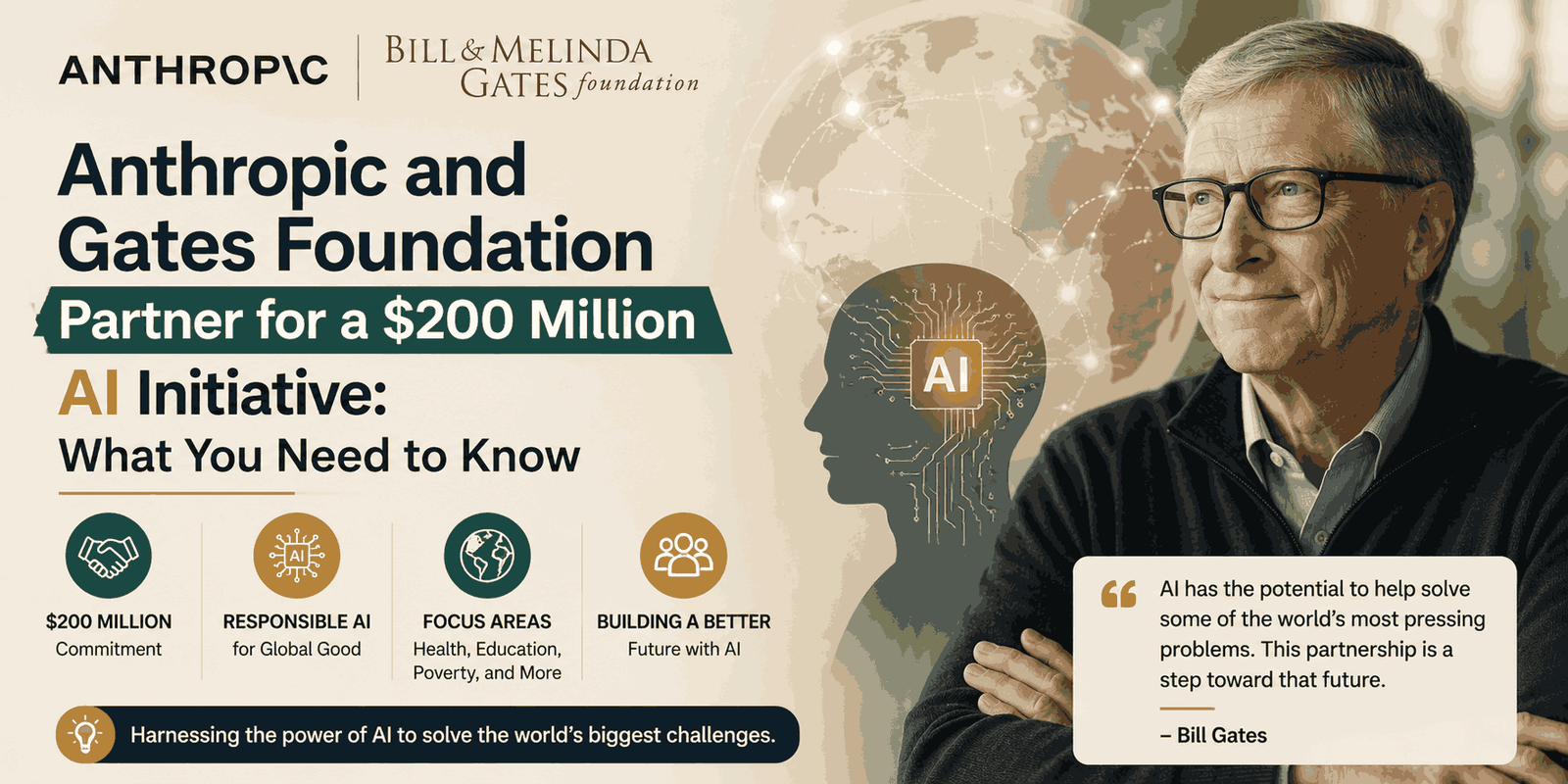
That’s why I really took notice of a recent announcement from Anthropic, the company behind the Claude AI model. They’ve teamed up with the Gates Foundation for a massive $200 million commitment. This isn’t just about making more AI; it’s about putting AI to work strategically where it can make the biggest difference, often in places traditional market forces might ignore. Over the next four years, this collaboration aims to tackle pressing global challenges, using AI to improve lives worldwide.
Let’s dive into what this partnership means and why it’s such an important step forward for beneficial AI.
What’s This Partnership All About?
At its heart, this initiative is a big investment to bring advanced AI capabilities – specifically Anthropic’s Claude – to critical sectors that often get overlooked by mainstream commercial development. The $200 million commitment from Anthropic and the Gates Foundation isn’t just cash. It includes grant funding, access to Claude usage credits, and direct technical support.
Anthropic’s “Beneficial Deployments team” is leading their part. This team focuses on extending AI’s reach to areas where market incentives might not be strong enough to drive innovation. They offer Claude credits, engineering support, and even create “public goods” like health datasets and evaluation benchmarks. Plus, Anthropic already offers discounted access to Claude for non-profits and educational institutions, showing a clear commitment to social impact.
Essentially, this partnership solves a crucial problem: how to use powerful AI for humanitarian and development goals, ensuring its benefits go to those who need them most, not just those who can afford them.
Key Features of the Collaboration
This ambitious partnership is built on several key components, all designed to maximize impact across different fields:
- Huge Investment: A $200 million joint commitment spread over four years. This covers grants, Claude credits, and technical support.
- Focused Priorities: The initiative targets four critical sectors:
- Global health
- Life sciences
- Education
- Economic mobility
- Global Reach: Programs will roll out in the US and globally, with a strong focus on low- and middle-income countries.
- Public Goods: The partnership aims to create AI-related public goods. Think specialized datasets, evaluation benchmarks, and “connectors” that let Claude work with other platforms. These resources will be shared with the broader community to spark even more innovation.
- Discounted Access: Anthropic will continue offering discounted access to Claude for non-profit organizations and educational institutions, making it easier for social good initiatives to use AI.
Real-World Use Cases: AI for Good in Action
This partnership isn’t just talk; it’s already outlining practical applications that could genuinely change lives.
Global Health and Life Sciences
A big chunk of this collaboration will focus on health outcomes in low- and middle-income countries. It’s a huge need, considering a staggering 4.6 billion people lack access to essential health services. Here’s how Claude will be put to work:
- Faster Medical Research: Claude will help develop new vaccines and therapies. Scientists are already using it to find patterns in huge datasets and screen potential drug and vaccine candidates.
- Tackling Neglected Diseases: The partnership will expand research to overlooked diseases like polio, HPV, and eclampsia/preeclampsia. For example, AI could dramatically cut down the early development time for new vaccines by computationally screening candidates before preclinical trials. HPV, which causes around 350,000 deaths annually (90% in low- and middle-income countries), is a key target for new therapy screening.
- Better Healthcare Insights: Claude will help create “connectors,” benchmarks, and evaluation frameworks. This will let researchers, developers, and governments better understand how AI performs on healthcare tasks.
- Supporting Decisions: Health ministries will be engaged to use AI-driven health data for critical decisions on workforce deployment, supply chain management, and outbreak detection.
- Empowering Frontline Workers: The initiative will explore how AI can support frontline health workers and patients in navigating complex diagnoses, treatment options, and medical decisions.
- Disease Forecasting: Anthropic is partnering with the Institute for Disease Modeling (IDM) to improve forecasts for diseases like malaria and tuberculosis, making these predictive models more accessible to practitioners and researchers.
Education
The partnership is also co-developing tools to boost educational outcomes for K-12 students in the US, sub-Saharan Africa, and India. This includes:
- Public Education Resources: Creating public goods like model benchmarks, datasets, and knowledge graphs to make sure AI tools for math tutoring, college advising, and curriculum design are truly effective. The first of these will be publicly released later this year.
- Personalized Tutoring & Guidance: In the US, Claude will power tools offering evidence-based tutoring for K-12 students and career guidance for those entering the workforce. You could think of this as a new kind of “Best AI Tools for Students” resource tailored for specific needs.
- Foundational Literacy & Numeracy: In sub-Saharan Africa and India, AI-powered apps are being created to support foundational literacy and numeracy programs, as part of the Global AI for Learning Alliance (GAILA).
Economic Mobility
Finally, the initiative targets programs aimed at improving economic mobility:
- Boosting Agricultural Productivity: For the nearly two billion people who rely on smallholder farming, the partnership will enhance Claude with agriculture-specific improvements, datasets of local crops, and benchmarks for agricultural applications. These will eventually be released as public goods.
- US Workforce Development: In the US, the focus is on:
- Developing portable digital records of skills and certifications to help people move between schools and jobs.
- Providing trustworthy career guidance for new job market entrants and those retraining.
- Creating tools to link training program data to employment outcomes, measuring which interventions actually lead to better job prospects and wages.
Why This Matters
This isn’t just another tech announcement; it’s a huge step that could have profound, real-world implications:
- Tackling Global Gaps: By focusing on low- and middle-income countries and underserved populations, this partnership directly addresses global inequalities in health, education, and economic opportunity.
- Speeding Up Innovation: The commitment to public goods—datasets, benchmarks, and connectors—will empower a wider community of researchers and developers, sparking more innovation beyond this partnership itself.
- Practical AI Automation: From predicting diseases to screening vaccine candidates and optimizing supply chains, Claude is being used as a powerful “AI Automation Tools” to make complex processes more efficient and accessible.
- Ethical AI Deployment: This initiative is a powerful example of using AI responsibly and ethically, prioritizing societal benefit over pure profit.
- Empowering Communities: Whether it’s a smallholder farmer getting better crop advice or a student in a remote village accessing literacy tools, the AI is designed to directly empower individuals.
This kind of initiative can serve as a blueprint for how AI can be used for social good, making AI accessible in ways that simple market dynamics might never achieve.
Who Should Pay Attention to This?
This partnership has broad implications, making it relevant for many groups:
- Global Health Organizations & NGOs: Anyone working to improve health outcomes, especially in developing countries, should follow these developments closely.
- Life Scientists & Researchers: Scientists looking for ways to speed up drug discovery, vaccine development, and disease modeling could benefit from the tools and public goods released.
- Educators & EdTech Developers: Those involved in K-12 education, curriculum design, and literacy programs, particularly in the US, sub-Saharan Africa, and India, will find these AI-powered tools valuable.
- Agricultural Businesses & Farmers: Individuals and organizations focused on boosting agricultural productivity, especially for smallholder farmers, should keep an eye on Claude’s agriculture-specific improvements.
- Policymakers & Government Agencies: Leaders interested in using AI for public services, economic development, and social welfare.
- AI Enthusiasts & Developers: Anyone keen to see how advanced AI models like Claude are applied to real-world, high-impact problems. This is a prime example of beneficial AI deployment.
- Anyone Interested in “AI Side Hustles” for Good: While not a direct “side hustle,” understanding how AI can be used for social good can inspire future projects.
Pros and Cons
Like any large-scale initiative, this partnership comes with its own set of advantages and potential challenges.
Pros:
- Massive Support: $200 million is a huge commitment, providing serious backing for crucial programs.
- Focus on Underserved Areas: Targets pressing issues in global health, education, and economic mobility where market solutions often fall short.
- Speeds Up Critical Research: AI can significantly accelerate vaccine and therapy development, potentially saving millions of lives.
- Improves Access: Brings AI-powered educational tools and health insights to regions that desperately need them.
- Ethical AI Deployment: Positions Anthropic’s Claude as a tool for social good, building trust and showing responsible AI use.
- Public Goods: Releasing datasets and benchmarks benefits the entire AI community, encouraging further innovation.
Cons:
- Long-Term Impact Unknown: While the commitment is significant, measuring the full, sustainable impact of these programs will take time.
- Complex Implementation: Deploying advanced AI in diverse, often resource-constrained environments globally presents significant logistical and cultural challenges.
- Relies on Partnerships: Success depends on effective collaboration with many local partners, which can be tricky to manage.
- AI Limitations: Even powerful AI like Claude has limits; it’s a tool that requires human expertise and oversight to be truly effective.
- Scalability Challenges: Ensuring these AI solutions can scale effectively across vast populations and varied contexts will be an ongoing effort.
Alternatives
While this partnership uses Anthropic’s Claude, the broader field of “AI for Good” or “AI for Social Impact” involves many different organizations and AI models. Other major AI labs, tech companies, and non-profits also have initiatives aimed at applying AI to global challenges. These often focus on areas like sustainability, disaster relief, accessibility, and human rights.
For those exploring powerful AI models for personal or business use, you might be comparing tools like “ChatGPT vs Gemini” or looking into “Best Free AI Tools” for general applications. However, for large-scale philanthropic efforts, partnerships like the one between Anthropic and the Gates Foundation represent a specific, well-resourced approach to using AI for the collective good.
Beginner Tips for Engaging with AI for Social Good
If you’re new to AI and curious about its positive impact, here are some practical tips:
- Stay Informed: Keep an eye on announcements from organizations like Anthropic, the Gates Foundation, and other initiatives in the “AI for Good” space.
- Understand the Problems: Learn about the specific global issues AI is trying to solve—whether it’s vaccine development, improving literacy, or supporting smallholder farmers.
- Explore Public Resources: When this partnership releases public datasets or benchmarks, check them out. Understanding these resources can give you insight into how AI models are trained and evaluated for specific tasks.
- Consider AI for Learning: If you’re a student or an educator, look into how AI is being used in learning environments. Projects from this partnership might provide new ideas for “AI Tools for Students.”
- Look for Open-Source Projects: Many “AI for Good” initiatives also involve open-source contributions. This can be a great way to see AI in action and potentially contribute if you’re a developer.
FAQ Section
Q1: What is the Anthropic and Gates Foundation partnership about?
The partnership is a $200 million commitment over four years from Anthropic and the Gates Foundation to deploy AI, specifically Anthropic’s Claude, for programs in global health, life sciences, education, and economic mobility, particularly in low- and middle-income countries.
Q2: What are the main areas of focus for this collaboration?
The four primary focus areas are: improving global health outcomes and life sciences research, enhancing educational opportunities for K-12 students, and boosting economic mobility, especially for smallholder farmers and job market entrants.
Q3: How will Claude AI be used in global health?
Claude will be used to accelerate vaccine and therapy development, detect patterns in large datasets, screen drug candidates, support decision-making for health ministries, assist frontline health workers, and improve disease forecasting for conditions like malaria and tuberculosis.
Q4: What is the total financial commitment and its duration?
Anthropic and the Gates Foundation have committed $200 million in grant funding, Claude usage credits, and technical support over the next four years.
Q5: How will this partnership benefit education?
The initiative will co-develop AI tools for K-12 students in the US, sub-Saharan Africa, and India, including evidence-based math tutoring, career guidance, and AI-powered apps for foundational literacy and numeracy. It will also create public goods like model benchmarks and datasets for education.
Final Thoughts
The partnership between Anthropic and the Gates Foundation clearly shows AI’s growing role in tackling some of the world’s toughest problems. It moves beyond the hype to focus on tangible, human-centric applications, channeling significant resources and advanced technology into areas where they can truly make a difference.
While achieving widespread impact is a complex journey, this collaboration sets a strong precedent for how AI development can align with societal good. We’ll be watching closely as these programs unfold, hoping to see powerful AI solutions contribute to a more equitable and healthier future for billions.
Want more AI tools, AI blogging tips, and AI money-making guides? Visit MakeDigitalProfits.com