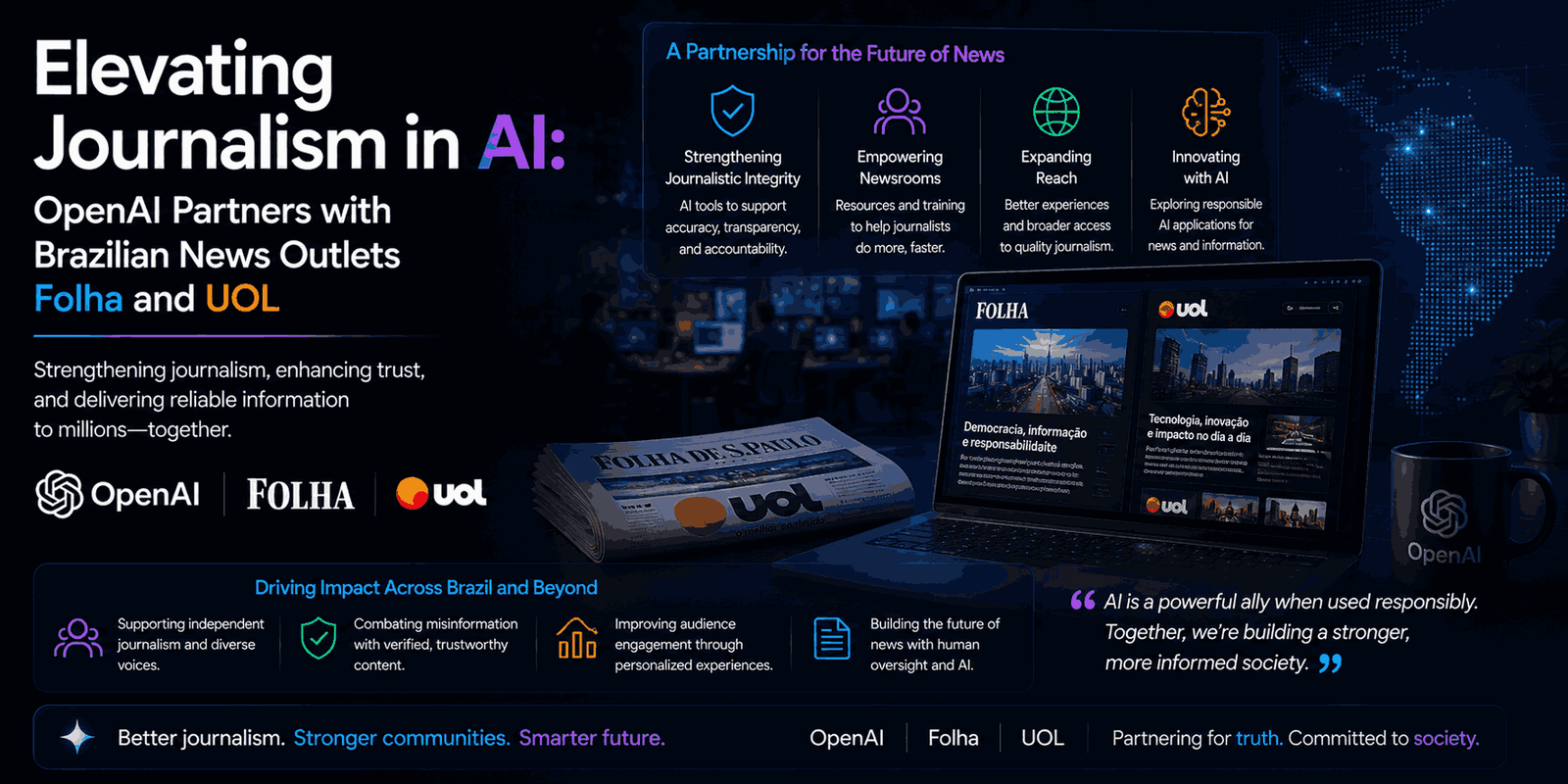
The world where AI meets professional journalism is changing fast. And now, OpenAI is taking a big step in Brazil, teaming up with two of the country’s most respected news organizations: Grupo Folha and Grupo UOL.
This move marks OpenAI’s first media partnership in Brazil. It’s part of a bigger plan to bring high-quality, properly credited journalism into its AI platforms. The goal? To give users more reliable and locally relevant information around the globe.
Right away, millions of ChatGPT users will start seeing summaries and insights taken directly from Folha de S.Paulo and UOL’s extensive reporting. This isn’t just about feeding content to an AI. It’s about setting up a clear way for AI platforms to respectfully use and share journalistic work.
Bringing Trusted News to ChatGPT
At its heart, this partnership is about getting credible, professional journalism front and center in AI-powered conversations. OpenAI stresses that this collaboration is built on key ideas: giving credit, being transparent, and linking back to the original news sources.
In today’s world, knowing where your information comes from is super important. This partnership ensures users can trace news content back to its origin, which is vital for building trust in AI tools.
Varun Shetty, OpenAI’s VP of Media Partnerships, explained the strategy: “Folha de S.Paulo and UOL are among Brazil’s most relevant sources of original reporting. By making their journalism accessible in ChatGPT, we want to bring more useful, timely, and locally relevant answers to ChatGPT while supporting the broader news ecosystem.” This shows they recognize that AI thrives when it uses reliable, human-created content.
Why Brazil? A Booming AI Scene
Brazil is a super important market for OpenAI. With over 50 million monthly active ChatGPT users and about 140 million messages sent every day, it’s one of the biggest user bases for the AI platform worldwide. Partnering with major local news providers like Grupo Folha and Grupo UOL means ChatGPT can offer information specifically for this vibrant audience, with insights that really connect with local events and interests.
Sérgio Dávila, Editor-in-Chief of Folha de S.Paulo, shared his thoughts: “The interest of an artificial intelligence giant like OpenAI in displaying content produced by Folha de S.Paulo and UOL only reinforces the importance of professional journalism.” Many in the industry agree, seeing these kinds of partnerships as a way to confirm and strengthen the role of traditional media in the digital age.
Wins for Everyone: More Than Just Sharing Content
This smart alliance helps both the AI giant and the Brazilian news organizations. It’s a win-win.
For Grupo Folha and Grupo UOL, this partnership brings:
- Wider Reach: Their journalism will reach new audiences globally through ChatGPT’s huge user base.
- Easier Discovery: ChatGPT users can find trustworthy news sources they might not have known about before.
- AI Innovation: Both groups get access to OpenAI’s advanced tools, like Codex, ChatGPT Enterprise, and API. This lets them explore how AI can help their reporting, create new products for readers, and make their internal work more efficient. As Carlos Ponce de Leon, Folha de S. Paulo’s co-CEO, put it, “By partnering with OpenAI, we are putting Folha at the forefront of this transformation and creating new ways to expand the reach, relevance, and impact of trusted journalism.”
From OpenAI’s side, getting content from trusted publishers like Folha and UOL means:
- Better Accuracy: Using high-quality, verified news helps fight misinformation and makes AI answers more factual.
- Different Viewpoints: Access to local reporting provides a richer, more diverse pool of information for ChatGPT to use.
- Stronger News World: By financially supporting and working with publishers, OpenAI helps the news industry stay strong, leading to a healthier information environment overall.
Paulo Samia, CEO of UOL, summed it up perfectly: “AI platforms benefit from reliable sources for news. It is only natural that they partner with the creators of high-quality content for that.”
What This Means for the Future of News and AI
This partnership where OpenAI partners with Brazilian news outlets like Folha and UOL shows a growing understanding that AI and journalism can work together. It’s a practical step to make sure that as AI becomes a bigger part of our lives, it continues to be informed by and promote professional, ethical journalism. The focus on giving credit and supporting the news world suggests a thoughtful approach to a complicated relationship, setting a good example for future collaborations worldwide.
FAQ Section
Q: What exactly does the OpenAI partnership mean for ChatGPT users?
A: ChatGPT users will now be able to access summaries and information directly from the trusted reporting of Folha de S.Paulo and UOL. This means more accurate, timely, and locally relevant answers, always highlighting the original source.
Q: Are Folha de S.Paulo and UOL giving away their content for free?
A: No, this is a strategic partnership. While their content will be used in ChatGPT, the agreement includes terms that support the publishers. They also gain access to OpenAI’s advanced AI tools (Codex, ChatGPT Enterprise, and API) to improve their own work and journalism.
Q: Does this partnership extend beyond Brazil?
A: This is OpenAI’s first media partnership specifically in Brazil, but it’s part of a broader plan. OpenAI has already made similar deals with publishers in other countries, including the United States, the UK, France, and Germany, showing a global commitment to integrating trusted journalism.
Final Thoughts
The collaboration where OpenAI partners with Brazilian news outlets Grupo Folha and Grupo UOL is more than just a content deal; it’s a statement about the future. It shows a way forward where AI can use human intelligence and creativity, supporting the crucial role of professional journalism in providing truth and context. As AI continues to grow rapidly, thoughtful partnerships like this will be key to shaping a beneficial relationship between advanced technology and public information.