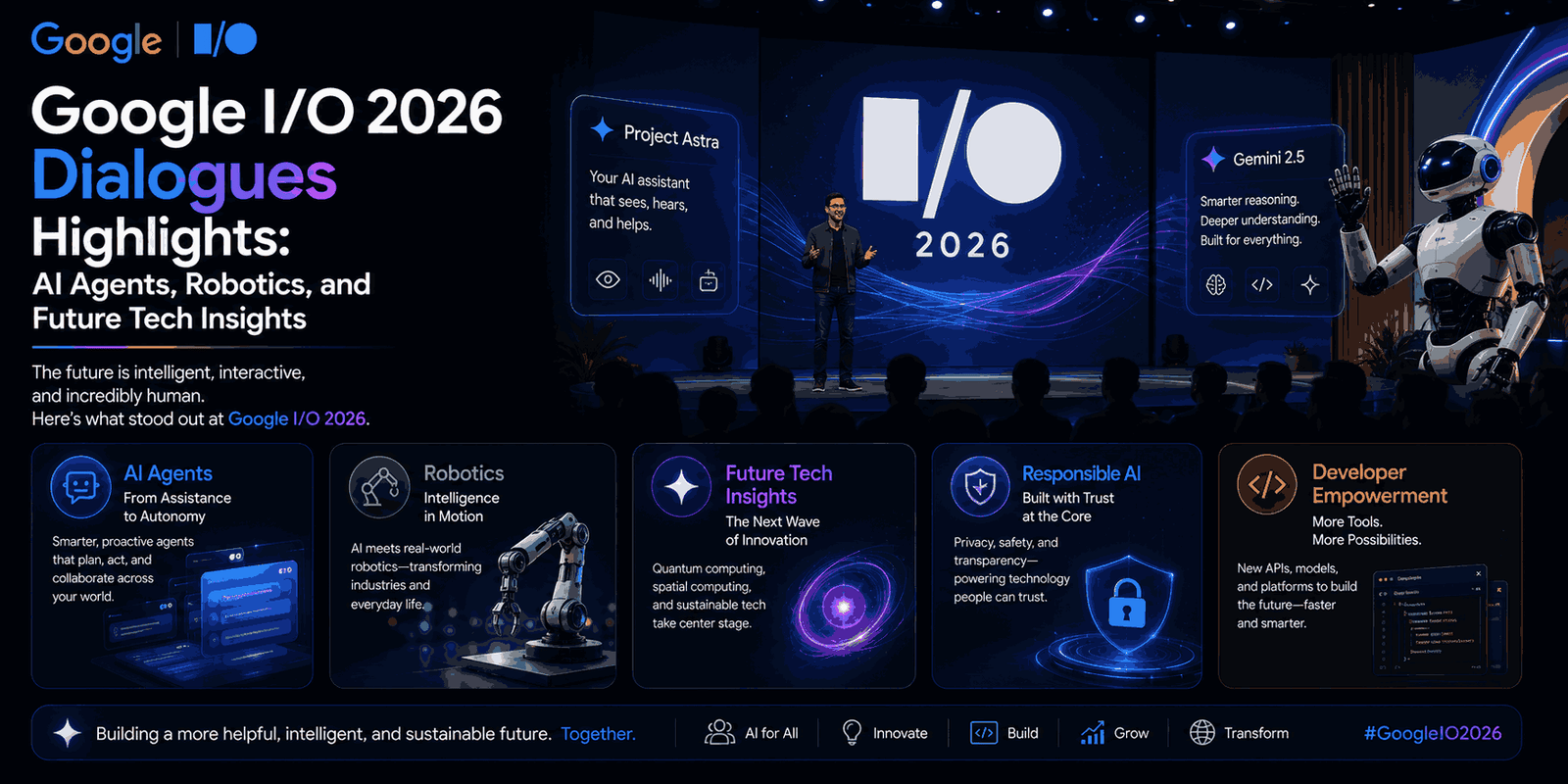
The annual Google I/O conference is always a big deal, giving us a peek at the latest in tech. And 2026 was no different! While the main keynote often grabs all the headlines, the “Dialogues” stage is where things get really interesting. It brings together Google’s brightest minds, top scientists, and creative thinkers to deep dive into the tech breakthroughs shaping our world. This year, the spotlight was definitely on Artificial Intelligence and its many applications.
If you missed the fascinating talks from the Google I/O 2026 Dialogues stage highlights, don’t worry! Here’s a full rundown of the most important conversations.
Unpacking the Vision: A Conversation with Sundar Pichai
The Dialogues stage kicked off with a compelling session featuring Google CEO Sundar Pichai. He sat down with Matt Berman, founder of Future Forward, to go beyond the usual keynote announcements.
They dove into the bigger picture: Google’s philosophy and long-term vision behind its ambitious tech pursuits. Pichai shared his thoughts on the ever-changing AI landscape and Google’s commitment to responsible innovation. This set the perfect tone for all the in-depth discussions that followed.
AI Agents: Redefining Productivity
One of the hottest topics was the rise of proactive AI agents. Imagine AI that anticipates what you need!
Google’s Josh Woodward, Koray Kavukcuoglu, Liz Reid, and Jeff Dean joined Logan Kilpatrick to discuss how these smart agents are set to change the way we work and use technology. The talk highlighted how AI is getting better at understanding user needs, automating complex tasks, and working on its own to boost productivity everywhere. It really pointed to a future where our digital helpers are much smarter and more integrated into our lives.
The Intersection of Quantum Computing and AI
The powerful blend of quantum computing and artificial intelligence continues to excite and challenge researchers. Hartmut Neven and James Manyika from Google took the stage to explore this deep connection.
They explained how quantum algorithms could supercharge AI’s abilities. This is especially true for things like complex data analysis, training machine learning models, and solving computational problems that were once impossible. It’s opening up completely new possibilities for both fields.
AI’s Role in Accelerating Scientific Discovery
Another major theme was how AI is helping humanity make huge strides in scientific research. Demis Hassabis, CEO of Google DeepMind, chatted with Axios’ Mike Allen about AI’s growing role in tackling some of science’s toughest challenges.
From discovering new medicines to modeling climate change and developing new materials, the discussion showed how AI isn’t just a tool. It’s becoming a true partner, pushing the limits of human knowledge and speeding up breakthroughs like never before.
Advancements in Embodied Robotics
Physical AI was front and center with a talk featuring Google DeepMind’s Kanishka Rao and Boston Dynamics’ Alberto Rodriguez, interviewed by NothingButTech’s Jacklyn Dallas. This session showcased the amazing progress in embodied robotics.
AI is now allowing physical robots to perform more intricate tasks, learn from experience, and interact with the real world in increasingly sophisticated ways. They explored the huge implications for industries like manufacturing and logistics, and even for everyday assistance at home.
Pushing Creative Boundaries with AI
Beyond the technical and scientific, the Dialogues stage also celebrated AI’s impact on creative fields. Director Doug Liman, along with Jed Weintrob and Julina Tatlock of 30 Ninjas, joined Google’s Mira Lane.
They discussed how AI is being used to push the boundaries of cinematic storytelling. From helping with script development and visualization to improving post-production, the conversation highlighted AI’s potential to empower filmmakers and artists. It’s fostering new ways to express creativity and create immersive experiences.
Why These Dialogues Matter
The discussions from Google I/O 2026’s Dialogues stage really drive home an important point: AI isn’t just one thing; it’s a transformative force impacting every area of innovation. These expert conversations give us a clear view of Google’s strategic direction, showing where they’re pouring significant research and development efforts.
For developers, entrepreneurs, and tech enthusiasts, these insights offer a glimpse into the foundational ideas and practical uses that will define the next generation of digital experiences and societal progress. It’s clear that from making our daily lives more productive to solving scientific mysteries and sparking artistic creation, AI is on a fast and thrilling journey upwards.
FAQ About Google I/O 2026 Dialogues
Q: What was the main theme of the Google I/O 2026 Dialogues stage?
A: The main theme focused on the broad impact and future path of Artificial Intelligence across many fields, including productivity, science, robotics, quantum computing, and creative industries.
Q: Who were some of the notable speakers at the Dialogues stage?
A: Key speakers included Google CEO Sundar Pichai, Google DeepMind CEO Demis Hassabis, and various Google leaders and researchers like Josh Woodward, Jeff Dean, Hartmut Neven, and James Manyika, alongside external creative visionaries.
Q: Did the Dialogues stage focus on new product announcements?
A: While Google I/O certainly featured new product announcements, the Dialogues stage specifically offered deeper discussions, strategic visions, and the technological breakthroughs behind those announcements, rather than just presenting them.
Q: Where can I watch the full sessions from the Dialogues stage?
A: All the Dialogues sessions from Google I/O 2026 are available for viewing on YouTube, usually in a dedicated playlist from the official Google Developers channel.
Final Thoughts
Google I/O 2026’s Dialogues stage offered a refreshing and in-depth look at the complex challenges and huge opportunities brought by modern AI and emerging technologies. The wide range of topics – from leadership discussions to detailed explorations of quantum computing and artistic uses – painted a vivid picture of a future deeply connected with intelligent systems.
These aren’t just technical advancements; they’re conversations about how we’ll live, work, and create in the years to come. Staying informed about these foundational discussions is absolutely key for anyone navigating our rapidly evolving tech landscape.
If you’re interested in diving deeper into any of these areas, make sure to check out Google’s research blogs or developer resources for more detailed insights.